|
|
|
We are living through a profound crisis of accountability. Governments defend themselves rather than reckon with the consequences of their actions. Institutions protect their reputations instead of telling the truth. Families carry generations of unspoken trauma. We divide into camps of innocence and blame, each convinced that the problem exists somewhere else.
Perhaps this is one of the great spiritual challenges of our time: our inability to apologize.
Not simply to say the words, but to develop the capacity to look directly at the harm we have caused, inherited, participated in, and continue to perpetuate. We have become skilled at explaining ourselves, our intentions, our circumstances, our history, our righteousness. We defend ourselves from the possibility that we might have been wrong. While we defend, the wound remains open.
The Alchemy of Apology begins with a different proposition: apology as a spiritual practice. A way of interrupting the cycle where shame becomes defensiveness, defensiveness becomes denial, denial becomes resentment, and resentment becomes more harm. A real apology asks us to surrender our attachment to innocence, to see ourselves clearly as people capable of causing harm and capable of changing.
Harm is never only personal. We are formed by systems and stories that precede us. We inherit ideas about race, gender, class, nation, belonging, power, and whose suffering matters. We inherit family patterns, cultural silences, histories that have been distorted or erased. We can participate in systems of harm without ever consciously deciding to hurt someone. This does not remove responsibility. It deepens it.
Accountability asks not only, what did I do? but what made this possible? What did I benefit from not seeing? What have I learned to consider normal?
The work of apology moves in four directions: investigating the personal and systemic roots of harm; naming what happened with clarity; understanding the emotional and spiritual impact; and taking responsibility through repentance, repair, and transformation. None of this is easy. This requires listening without defending our intentions, understanding that impact matters even when harm was not intended and recognizing that remorse without change can become another form of avoidance.
|
|
|
|
|
|
|
|
|
This is where apology becomes political. We cannot confuse apology with justice, or words with repair. A government acknowledging violence does not undo the violence. An institution naming its history does not automatically transform the conditions that produced it. A personal apology does not obligate the harmed person to forgive. But truth can change the ground on which repair becomes possible. Accountability can interrupt the endless inheritance of harm. Many of us will never receive the apology we deserve. There are parents who will never acknowledge what they did, institutions that will continue to deny responsibility, and histories whose perpetrators are long gone. For this reason, we also explore the practice of writing an apology on behalf of someone who cannot or will not offer one. This is not to absolve them, but to give language to the acknowledgment that was absent, and to stop allowing another person's refusal to tell the truth to determine the limits of our own healing.
At its deepest level, apology is an act of love. The kind of love that is willing to tell the truth because the relationship matters. It asks us to move beyond the binary of guilt and innocence and into the much more difficult territory of responsibility.
It asks what we are willing to repair, what we are willing to relinquish, and who we are willing to become.
In a fragmented world, we do not need more performances of righteousness. We need people willing to examine their own participation in the stories and structures that keep us divided. We need the courage to listen to the people who have been harmed and the humility to say, I did not understand before, but I am willing to understand now. We need the imagination to believe that accountability does not have to end in shame. It can lead somewhere.
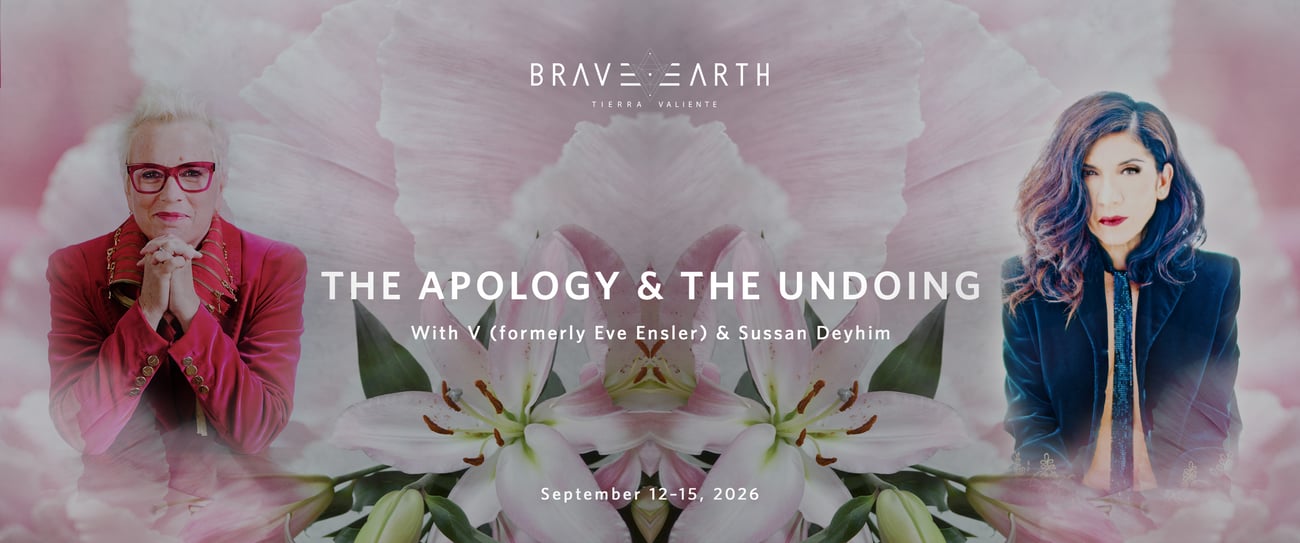
The Alchemy of Apology
is an invitation into that somewhere.
Through storytelling, contemplative practice, writing, and honest reflection, we explore apology as a spiritual praxis for shame, rage, estrangement, and the patterns through which harm travels across generations.
Each participant crafts one sustained apology, to another person or to themselves, and sits with the uncomfortable, tender, transformative work of telling the truth.
Perhaps the opposite of fragmentation is not agreement, but our capacity to stay in relationship while telling the truth about what happened. Perhaps liberation begins when we no longer have to choose between accountability and love.
|
| Register Here |
|
|
|
|
|
|
|
For a full list of events offered at Tierra Valiente please visit our website. |
|
|
|
|